Start with what you sterilise, not with the machine
The load decides almost everything else. Write down what goes in on a normal day, and what goes in on the worst day of the month.
Culture media and other liquids, glassware, wrapped instruments, porous loads such as gowns and filters, and biohazard waste all behave differently in steam. Liquids need a slow exhaust so they do not boil over. Porous loads need air removed from the chamber before steam can reach them. Waste needs a longer hold.
- Liquids in bottles or flasks: gravity cycle with a slow, controlled exhaust
- Glassware and empty containers: standard gravity cycle
- Wrapped instruments and textiles: cycles with air removal, usually at a higher temperature
- Waste: longer hold time, and a way to contain condensate
Vertical or horizontal?
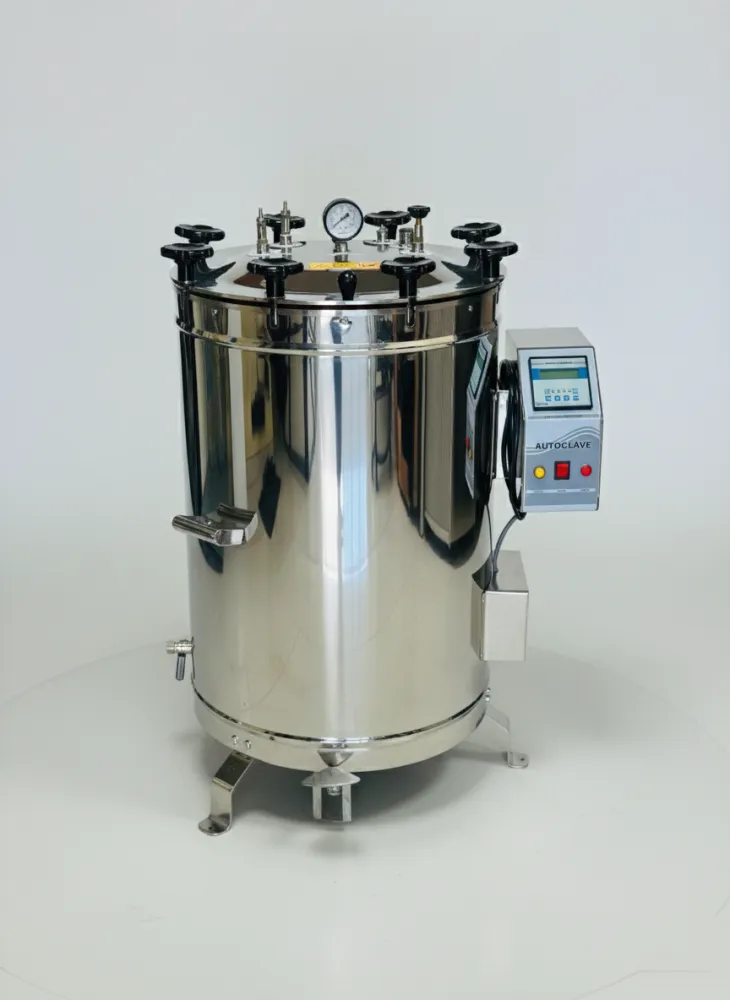
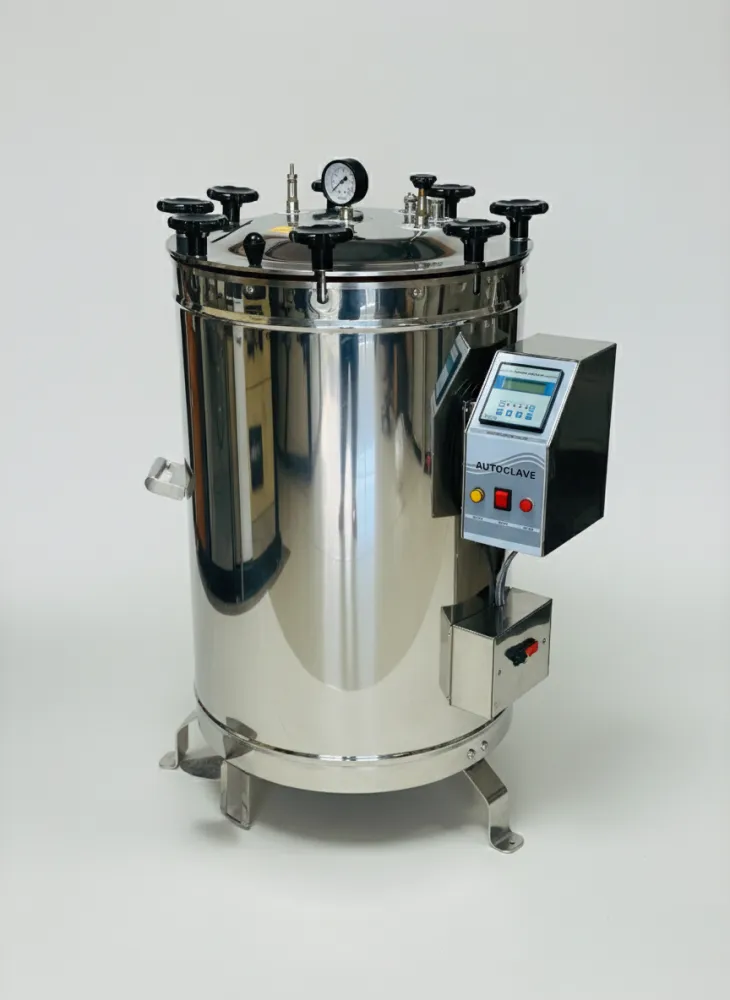
A vertical, top-loading autoclave suits small and medium batches. It takes little floor space and is the usual choice for microbiology and QC labs that run a few loads a day.
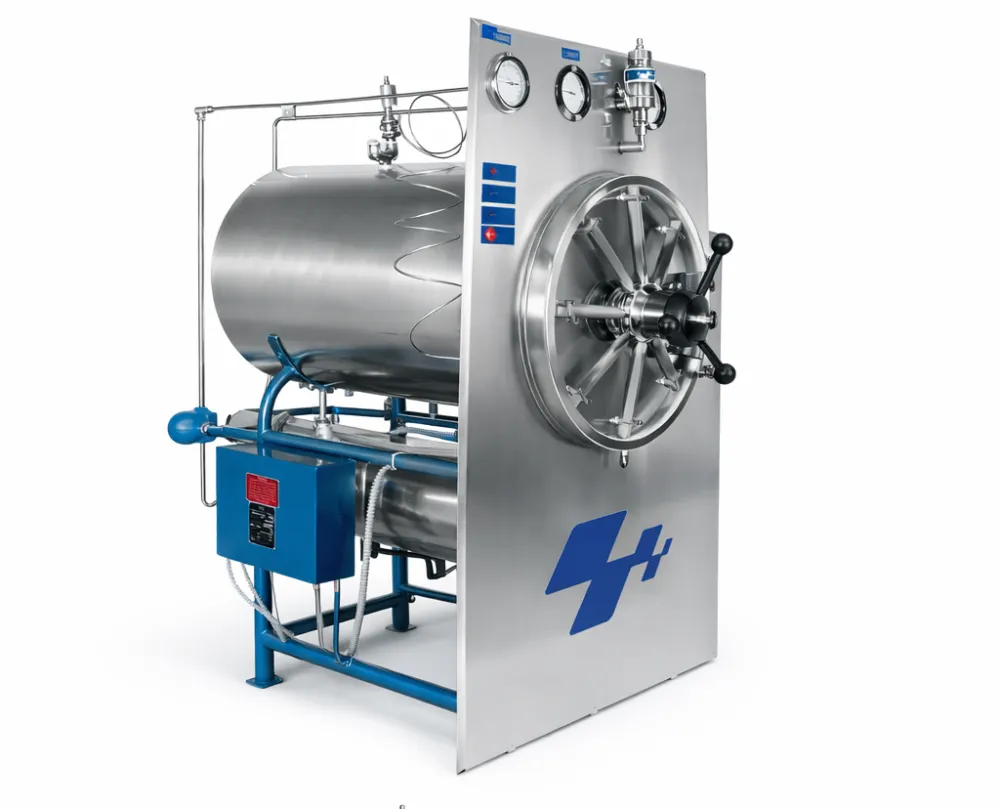
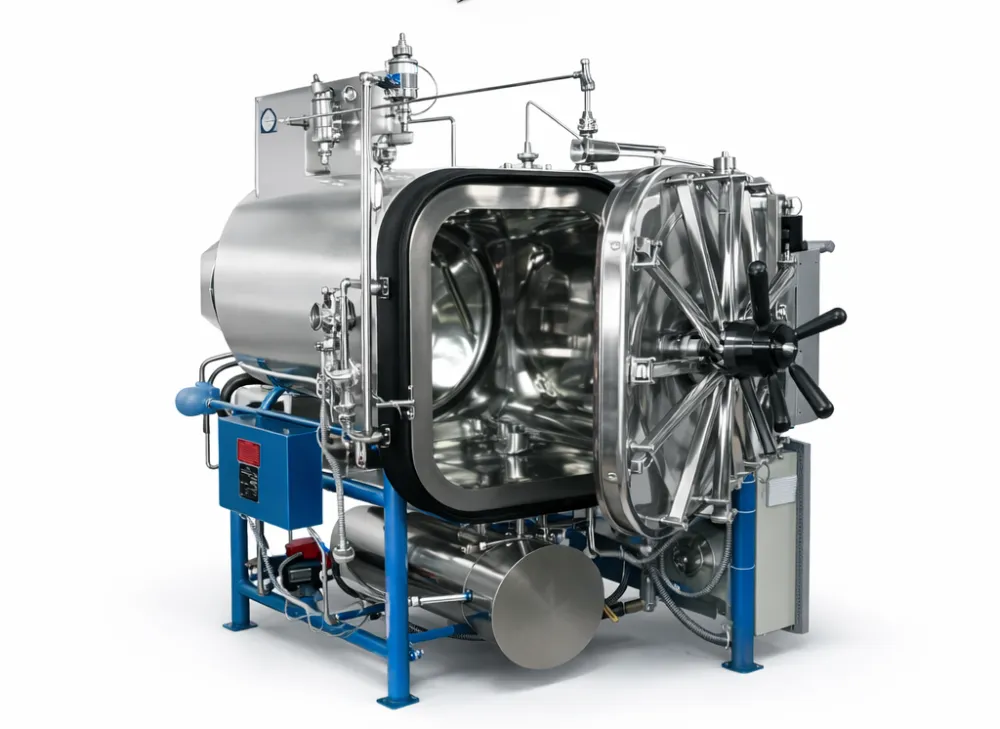
A horizontal, front-loading autoclave suits bulk work. Trays and trolleys slide in at waist height, the chamber is larger, and it is easier to load heavy or awkward items. Pharmaceutical plants, hospital sterilisation units and production areas usually choose horizontal machines. Some are built with double doors so that loading and unloading happen in different rooms.
Sizing the chamber
Size for the largest routine load, not the largest load you can imagine. Steam has to circulate between items, so a chamber packed to the walls sterilises worse than a half-full one.
It is usually better to choose the next size up than to run a machine at its limit every day, and better than buying capacity that will sit empty. If your loads vary a lot, two smaller autoclaves give you more flexibility than one large one.
Temperature and time
The familiar cycle is 121 °C at about 15 psi, held for 15 to 30 minutes depending on the load. Many hospital and instrument cycles run at 134 °C for a shorter hold. Your SOPs or the standard you work to will fix the numbers. What you need from the machine is that it can hold them accurately and record them.
Construction and safety
The chamber should be stainless steel: SS 304 for general laboratory work, and SS 316 or 316L where corrosion resistance or a pharmaceutical finish matters. Ask whether the vessel is built to a recognised pressure-vessel standard and whether it carries the statutory inspection and test documents your site requires.
- Door interlock, so the door cannot open under pressure
- Safety valve, and a second independent over-pressure device on larger machines
- Low-water protection for machines with their own steam generator
- Over-temperature cut-out that works independently of the controller
Controls and records
A microprocessor controller with stored cycles is enough for most teaching and research labs. If you work under GMP or GLP, you will want a PLC-based controller with cycle printouts or electronic data logging, so every batch leaves a record. Ask what is recorded, how it is protected from editing, and how the data is exported.
Utilities and site preparation
Check the electrical supply before you order. Small autoclaves run on single-phase 230 V; larger ones with a built-in steam generator need three-phase 415 V and a properly rated breaker. Also plan for water supply, a drain that can take hot condensate, ventilation around the machine, and enough clear floor for the door to open and for the load to be moved.
Validation from day one
If the autoclave is used for a regulated process, plan its qualification before it arrives: installation qualification (IQ), operational qualification (OQ) and performance qualification (PQ), including temperature mapping of the loaded chamber and biological indicators. Ask the supplier for the documentation package and for calibration of the sensors as part of delivery. Our guide to IQ, OQ and PQ explains what each stage covers.