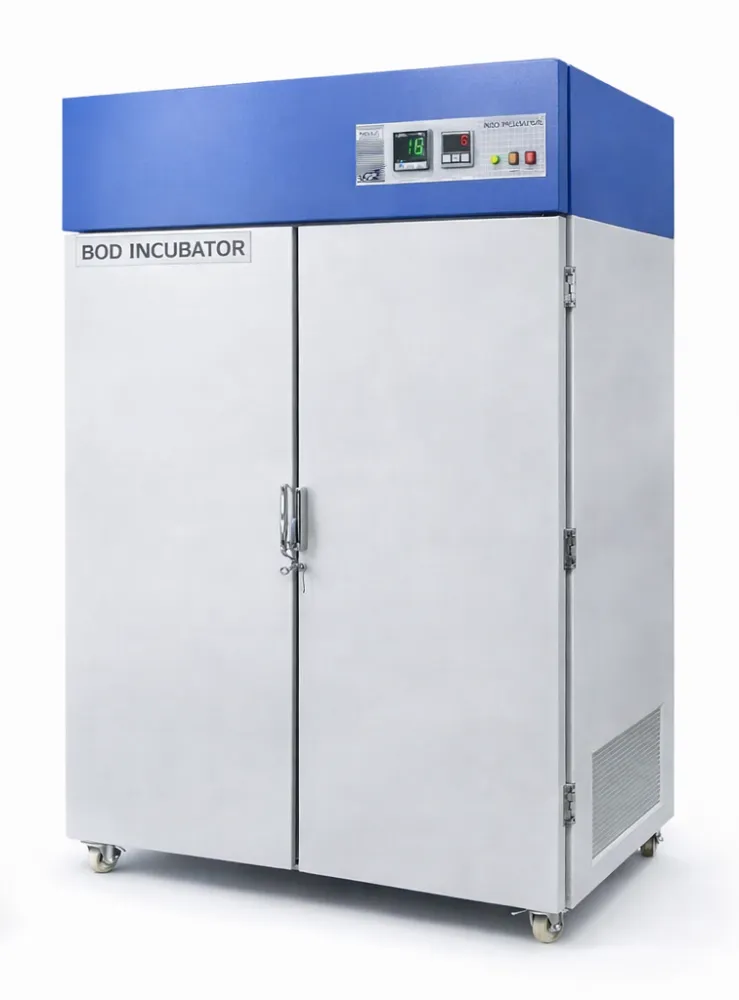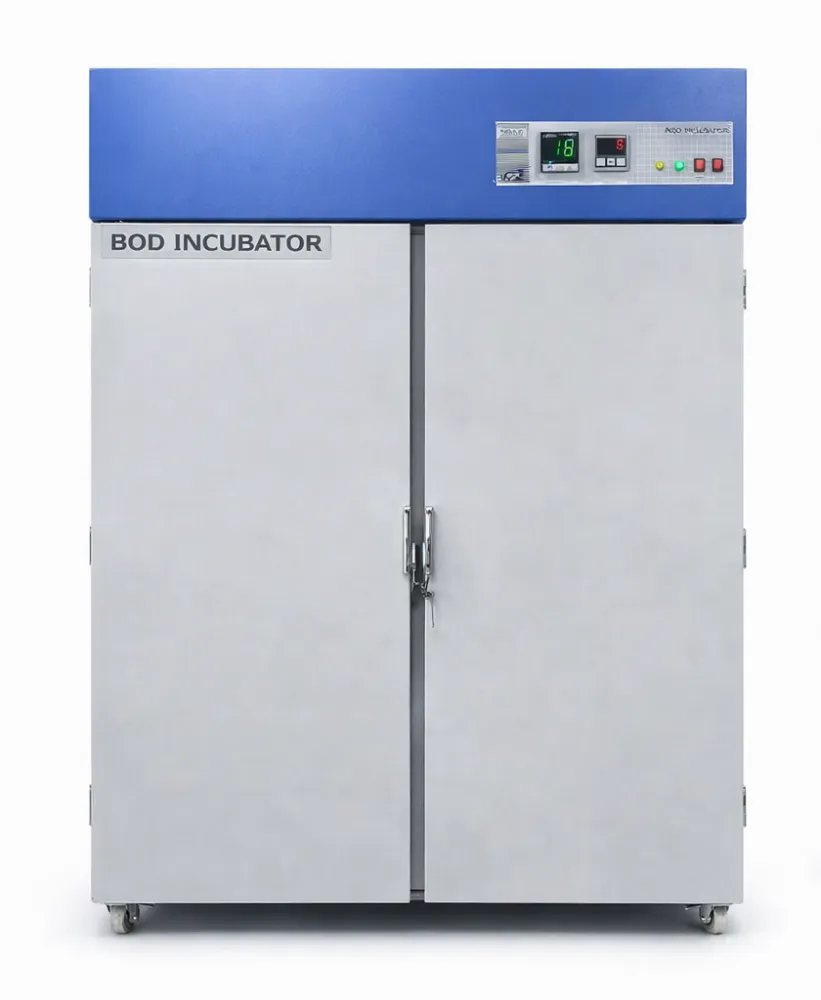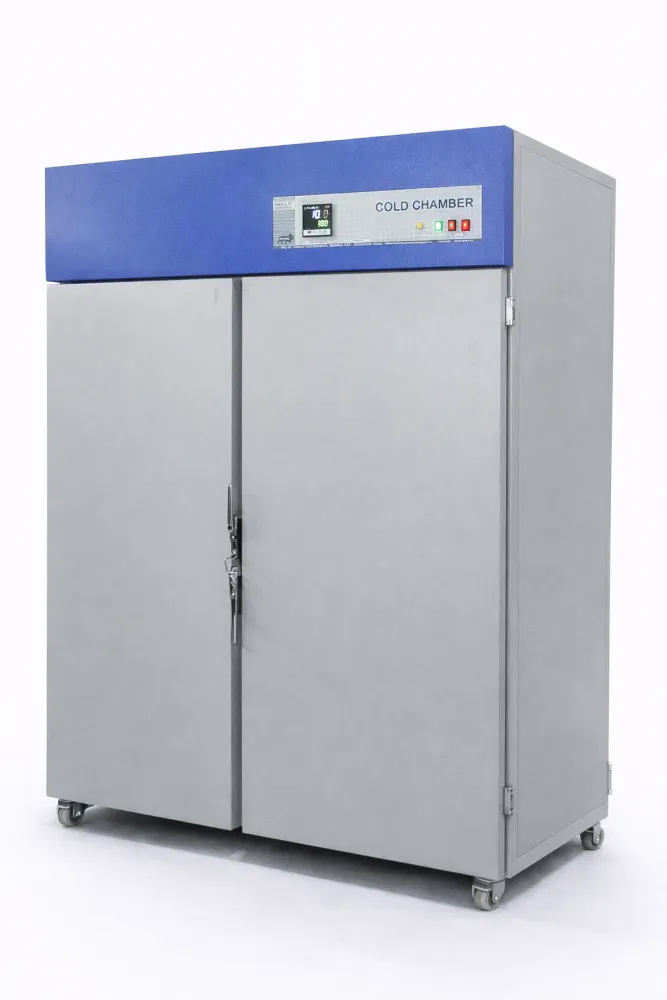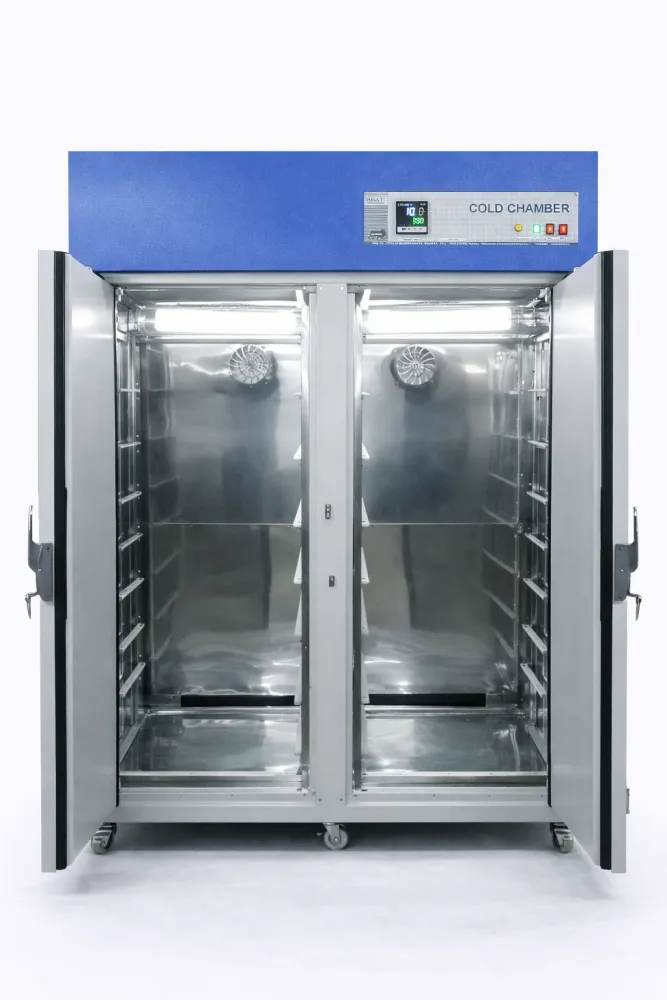
What a BOD incubator has to do
The standard biochemical oxygen demand test incubates sealed sample bottles in the dark for five days at 20 °C, typically held within about one degree. A BOD incubator therefore has to hold a steady temperature that is often below room temperature, day and night, for days at a time.
That is why a BOD incubator has both a heater and a compressor. In an Indian summer, room temperature is often well above 20 °C, so a heating-only incubator cannot do the job.
Temperature range and uniformity
Check the working range at the top and the bottom. Many BOD incubators run from a few degrees above freezing up to around 50 °C. What matters more than the range is uniformity: every bottle on every shelf should see the same temperature. Ask for uniformity figures and for how they were measured, and plan to verify them by mapping the loaded chamber.
Capacity and shelving
Work out how many bottles you incubate at a time and whether the shelves can take them with air gaps between. Adjustable shelves in stainless steel or another corrosion-resistant material make the chamber easier to clean and easier to reconfigure. Leave room for airflow rather than filling the chamber solid.
Construction and controls
Look for a stainless steel interior, a powder-coated or stainless exterior, well-insulated walls and a door gasket that seals evenly. A microprocessor PID controller with a clear display holds temperature far better than a simple thermostat. Useful extras include an over-temperature cut-out, audible alarms, a power-failure memory, and a USB or printer output if your quality system needs records.
Humidity is a different machine
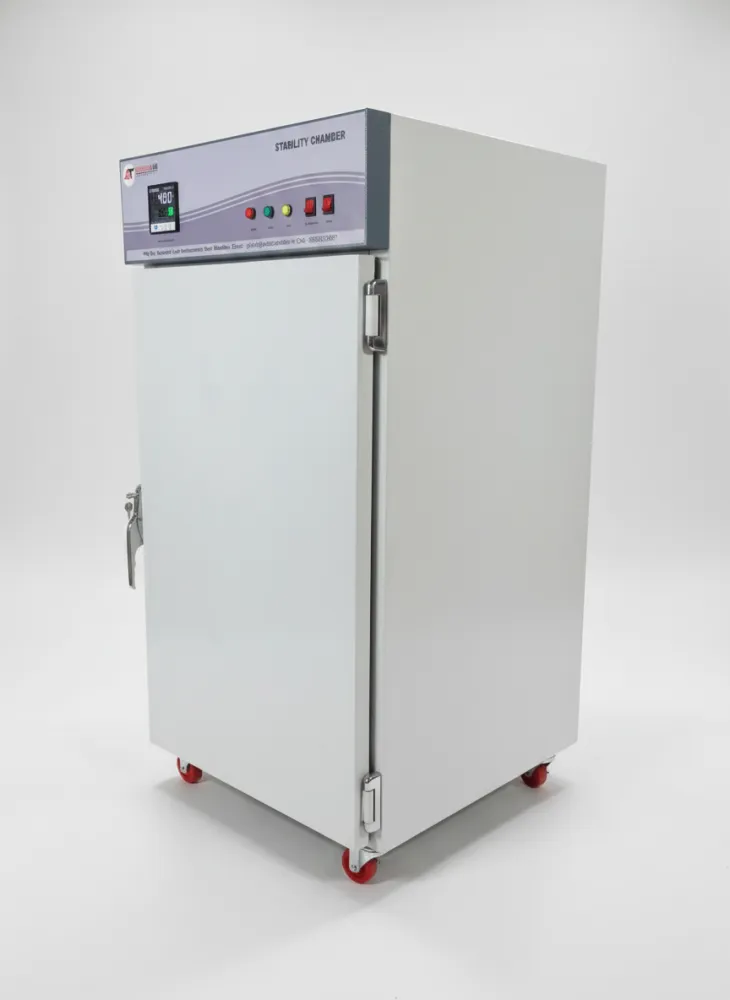
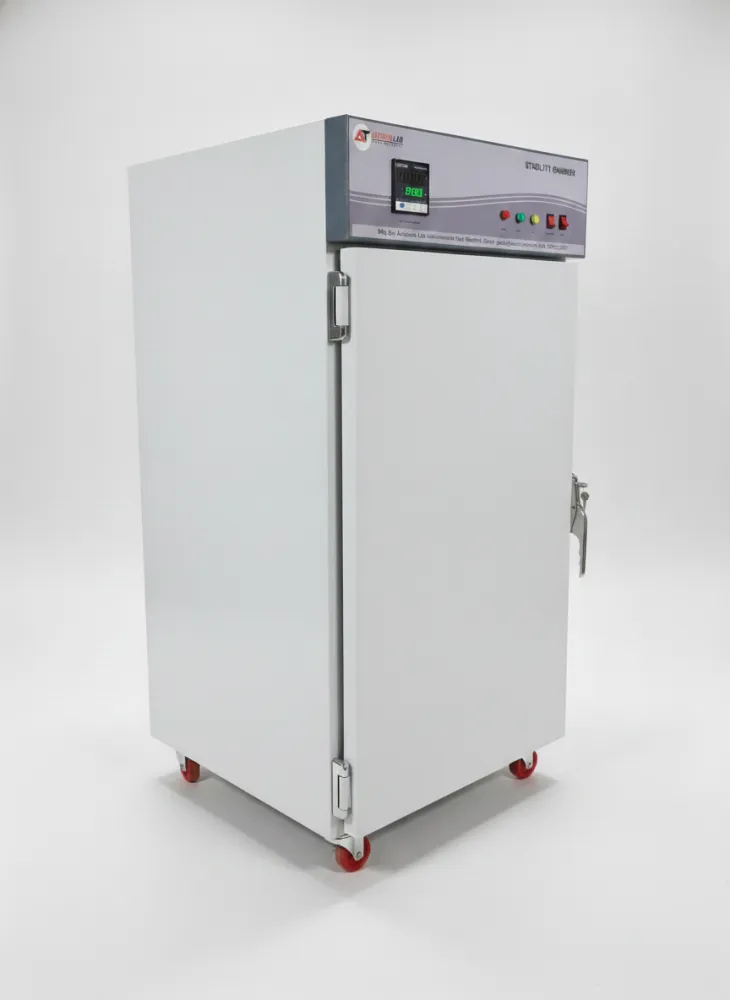
A BOD incubator controls temperature, not humidity. If you need controlled humidity, for stability testing for example, you need a stability chamber or a humidity chamber instead.
Placement and running it well
Give the incubator clearance for its condenser to breathe, keep it out of direct sun, and put it on a stable, level floor. Use a voltage stabiliser where the supply is uneven, because compressors dislike voltage swings. Calibrate the sensor at least once a year and log the temperature so you can show the test conditions held.